

Simple Ways to Make Your Home More Energy Efficient
Making your home more energy efficient reduces bills, improves comfort, and lowers your carbon footprint. You don’t need a complete remodel to see meaningful savings—small, targeted changes add up quickly.
This guide lays out practical, trustworthy steps you can take today, organized so you can pick the improvements that match your budget and timeline.
1. Start by measuring where energy goes
Before spending money, identify the biggest energy drains in your home. A whole-house monitor or circuit-level sensors reveal patterns and surprises—like phantom loads from appliances or a heater cycling inefficiently. Consider using a dedicated Home Energy Monitoring solution to track usage in real time and prioritize the highest-impact changes.
2. Seal and insulate the building envelope
Air leaks and inadequate insulation are among the easiest problems to fix with the biggest payoff. Focus on attic insulation, weatherstripping doors and windows, sealing gaps around plumbing and wiring, and insulating accessible ducts. If you’re planning any rooftop work—like reroofing or adding solar—inspect flashing and roof penetrations and consider compatible Solar Installation Accessories while the roof is open to avoid future leaks and rework.
3. Improve heating and cooling efficiency
Heating and cooling represent the largest share of home energy use for most households. Simple, high-impact actions include cleaning or replacing HVAC filters, scheduling yearly tune-ups, installing a programmable or smart thermostat, and improving duct sealing. If you’re installing on-site generation or battery backup to reduce grid use, choose a quality Inverter that matches your system size—an efficient inverter reduces conversion losses and helps run HVAC equipment more reliably during grid outages.
4. Switch to efficient lighting and controls
Replace incandescent and halogen bulbs with LEDs and add occupancy sensors or timers in seldom-used rooms and outdoor areas. For exterior lighting and remote locations, Solar Lighting options now provide reliable, maintenance-light solutions that cut electrical use without sacrificing safety or curb appeal.
5. Reduce appliance and electronics waste
Large appliances (refrigerators, dryers, washers) and entertainment centers are often major contributors to a home’s energy bill. Replace aging appliances with ENERGY STAR or equivalent high-efficiency models when it’s time. Use smart plugs and power strips to eliminate vampire loads; schedule high-energy tasks like laundry and dishwashing during non-peak hours. A compact smart plug—installed on priority devices—gives immediate, measurable savings and load control for automation.
For monitoring and automation of individual outlets and devices, a smart plug like the TP-Link Tapo Smart Plug can help you set schedules and view energy consumption per device.
6. Consider solar generation, batteries, and controllers
Installing solar panels paired with the right balance of charge controllers and batteries can dramatically reduce grid consumption and provide resilience. Start by sizing panels to meet your primary loads, add a suitable charge controller to protect and optimize battery charging, and choose storage sized for your backup and daily offset goals. If you’re taking the solar route, evaluate models and system kits in the Solar Panels category, then add compatible inverters and storage based on your needs.
7. Use portable power and generators strategically
Portable power stations and solar generators provide flexible backup for specific loads—refrigerator, critical medical equipment, or communications—without wiring an entire home. They’re especially useful during outages, for seasonal cabins, and when pairing with small solar arrays. If you want a compact, plug-and-play option for emergency or temporary power, look into the range of Portable Power Stations that combine battery storage with multiple output ports and solar recharge capability.
8. Plan for electric transportation and smart charging
Transitioning to an electric vehicle (EV) reduces household fuel costs and integrates well with a low-carbon home energy plan. At home, use a Level 2 charger to shorten charge times and take advantage of time-of-use rates. If you’re on a solar-plus-storage roadmap, coordinate EV charging with solar production or off-peak grid hours to maximize value. Explore available EV Chargers and charging strategies to fit your garage or driveway setup.
Small checklist: Quick actions you can do this weekend
- Install LED bulbs in the 5 most-used fixtures.
- Seal gaps around doors and windows with weatherstripping or caulk.
- Replace or clean HVAC filters; set thermostat 2–3 degrees lower in winter (higher in summer).
- Unplug chargers and rarely used electronics or connect them to a smart strip.
- Run a home energy monitor for one week to identify top loads.
- Move fridge away from heat sources and check door seals.
FAQ
- How much can I expect to save? Savings vary, but simple steps like LEDs, sealing, and thermostat setbacks often yield 10–20% reductions. Bigger investments like insulation or solar can deliver larger, longer-term savings.
- Is a home energy monitor difficult to install? Many modern monitors are DIY-friendly and clamp to main service conductors; professional installation is recommended for panel work or circuit-level setups. If you want a consumer-ready option, check the Refoss Smart Home Energy Monitor or similar devices.
- Should I add batteries with my solar panels? Batteries increase self-consumption and provide backup power, but they add to upfront cost. For resiliency or to avoid time-of-use peaks, batteries are a smart addition—compare capacities and chemistry before deciding.
- Can small portable power stations replace a whole-home generator? For targeted or short-duration loads, yes—portable power stations are quiet, emission-free, and easy to use. For whole-home, long-duration outages, a larger generator or integrated battery system is usually required.
- Do smart plugs really save money? Yes—by cutting phantom loads and enabling schedules, smart plugs reduce unnecessary consumption. They’re inexpensive and offer clear, short-term payback on many circuits.
Conclusion
Improving home energy efficiency is a sequence of measurable steps: measure, prioritize, and implement. Start with monitoring and low-cost fixes, then invest in insulation, efficient HVAC, and targeted generation or storage as your budget allows. Even modest changes create immediate comfort and cost benefits—pick one action from the checklist and begin today.
Products Featured in This Article
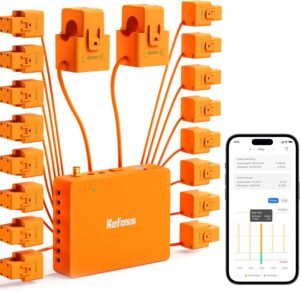
Refoss Smart Home Energy Monitor wi…
From the brand Does this home energy monitor work without internet or cloud services? Yes. This…
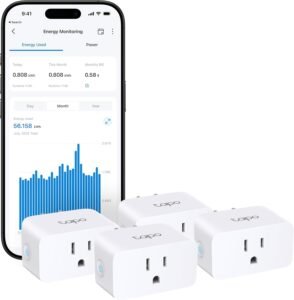
TP-Link Tapo Smart Plug Mini, Matte…
Experience the future of smart home convenience and sustainability with the Tapo P110M Smart Wi-Fi Plug,…
