
How to Choose Comfortable Footwear for Hajj and Umrah
Preparing for Hajj or Umrah means planning for long days on your feet, heat, crowds and frequent standing. Comfort and practicality in footwear make the journey safer and allow you to focus on worship rather than blisters or aching feet.
Start your planning with reliable resources about the pilgrimage and essentials so you know what to expect and what to pack. For a central place to browse appropriate products and guidance, see Hajj & Umrah.
Understand the walking and climate conditions
Routes in and around the Grand Mosque, Mina and Arafat vary from well-paved promenades to uneven stone and occasional sand. Expect long continuous walking, standing for prayer and surges of crowds that require sure footing. Shoes should be lightweight enough for long distances but sturdy where surfaces are rough or slippery.
Consider also proximity to prayer spaces and items you’ll use during worship—keeping small items accessible helps after removing footwear. See choices for prayer items at Prayer & Worship Essentials when planning how you’ll combine footwear and prayer routines.
Prioritize fit, support and sizing
Correct sizing is the single most important factor. Feet swell with heat and walking; buy footwear with 0.5–1 cm extra length and enough width for toes to splay. Try shoes on later in the day when feet are naturally larger.
Look for shoes with a contoured footbed or removable insoles so you can fine-tune support. A firm heel cup stabilizes the foot and reduces fatigue. For sandals, test the strap security and heel strap or back support to prevent slipping in crowds.
Materials, breathability and drying
Breathable materials (mesh, perforated leather, quick-dry synthetics) reduce sweating and friction. Avoid heavy leather that traps heat unless it’s ventilated. If you expect occasional rain or washing, choose materials that dry quickly to prevent blisters.
For multi-day use, pick footwear with antimicrobial or washable liners if possible; these reduce odor and skin irritation when you can’t wash shoes frequently.
Soles: grip, cushioning and protection
Balance between cushioning and stable ground feel. Thick cushioned midsoles protect joints during long walks, but overly soft soles can make uneven terrain harder to negotiate. A patterned rubber outsole with good lateral grip reduces slipping on tile or polished stone.
Toe protection matters where crowds are dense—covered toes in a lightweight shoe protect against accidental stubbing. In very hot weather, insoles with good shock absorption will reduce pain during repeated standing and walking.
Ihram rules and practical modesty
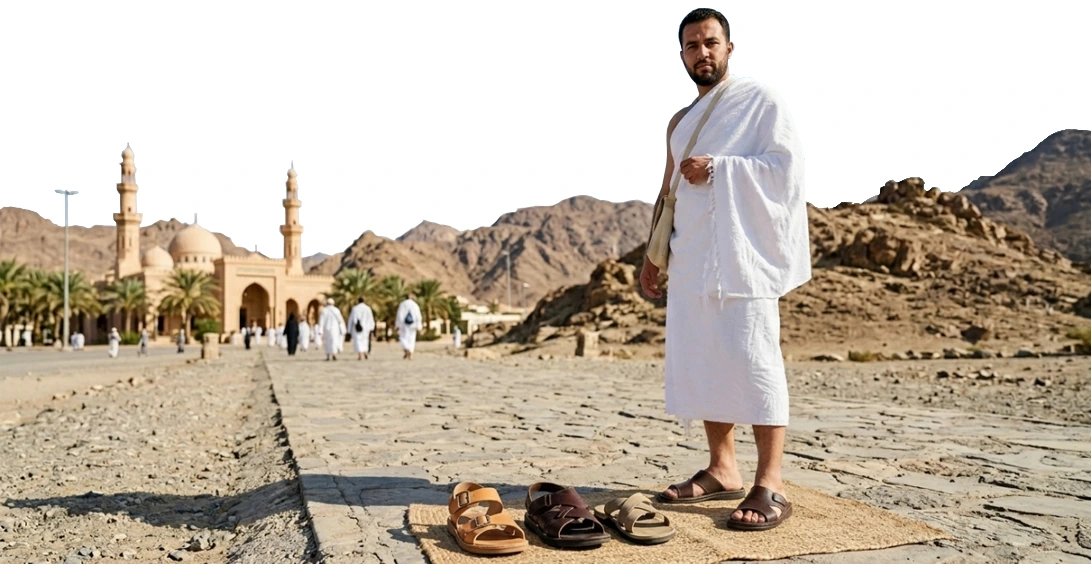
If you’ll be wearing ihram, check the practical guidance for footwear permitted by your school of thought and local authorities; some pilgrims opt for simple sandals that are easy to remove and reapply while complying with requirements. To coordinate footwear with Ihram garments and other clothing choices, review options in the Ihram & Clothing category.
Break-in, testing and packing strategy
Never wear brand-new shoes for Hajj or Umrah. Break them in over several weeks with progressively longer walks; test them with the socks you plan to use. Simulate crowd conditions and incline walking where possible.
Pack a lightweight, dedicated shoe bag or organizer so shoes don’t soil clothing and are easy to access between rituals. For compact prayer and personal items that you may keep near your footwear, consider practical travel organizers from Travel Bags & Organizers.
If you use a small travel prayer mat to maintain cleanliness around shoes during prayer breaks or while resting, a compact option like the 5 Pack Portable Travel Prayer Mat can be convenient to carry and share with travel companions.
On-the-road care: socks, insoles and hygiene
Socks matter as much as shoes. Choose breathable, moisture-wicking socks with thin cushioning in the heel and forefoot. Merino or technical blends reduce friction and blister risk. Bring at least two pairs per day if you expect heavy sweating or limited laundry access.
Pack a pair of spare insoles (low-profile, supportive) and replaceable heel pads to adjust fit mid-trip. Keep a small foot-care kit: adhesive blister pads, antiseptic wipes, and a compact pumice or foot file. For items that improve personal comfort like cooling towels or disposable seat covers, check the Hydration & Personal Comfort category.
Buying tips, features checklist and recommended sources
When shopping, prioritize reputable brands with clear sizing charts and return policies. Try shoes with the socks and insoles you’ll use, walk on varied surfaces in-store, and pay attention to construction quality: secure stitching, sturdy straps and non-marking rubber soles.
Build a packing list of footwear alternatives—one pair for long walks, a second lighter pair for showers or short trips, and a compact flip style if allowed by your ritual practice. For curated pilgrimage essentials and footwear-friendly accessories, browse Hajj & Umrah Essentials.
If you want practical guides on packing, footwear selection and pilgrim checklists, consult planning resources and manuals in Books, Guides & Islamic Resources before you finalize purchases.
Checklist: Footwear essentials for Hajj and Umrah
- Proper fit: 0.5–1 cm extra toe room, correct width
- Breathable, quick-dry materials
- Supportive heel cup and removable insoles
- Non-slip patterned rubber sole with good traction
- Lightweight and easy to put on/remove
- Broken-in before travel; carry spare insoles and blister kit
- Pack shoes in a dedicated travel bag to keep things clean
FAQ
Q: Can I wear closed shoes during Ihram?
A: Guidance varies by school of thought. Choose shoes that match your personal compliance and comfort, and check local or group guidance before travel.
Q: How many pairs should I bring?
A: Bring two functional pairs—one for long-distance walking and one lighter pair for short trips or showers—plus a compact pair if needed for rituals.
Q: What if my feet swell in the heat?
A: Pack breathable, stretch-friendly footwear and slightly larger sizes. Use adjustable straps or removable insoles to adapt fit during the day.
Q: Are sandals better than trainers?
A: Both can work. Trainers offer more protection and cushioning; sandals are lighter and easier to wear with ihram in some practices. Choose based on terrain, expected crowds and compliance with ritual rules.
Q: How do I prevent blisters?
A: Break shoes in early, wear moisture-wicking socks, consider friction-preventing tape in hot spots, and carry blister pads for quick treatment.
Conclusion
Comfortable footwear for Hajj and Umrah is about fit, breathability, support and smart preparation. Test and break in shoes well before departure, pack a practical backup and carry a small foot-care kit. With the right planning you’ll protect your feet and preserve energy for worship.
Products Featured in This Article

5 Pack Portable Travel Prayer Mat w…
Portable Travel Prayer Mat: you will receive 5 pcs portable muslim prayer rug in different 5…
