
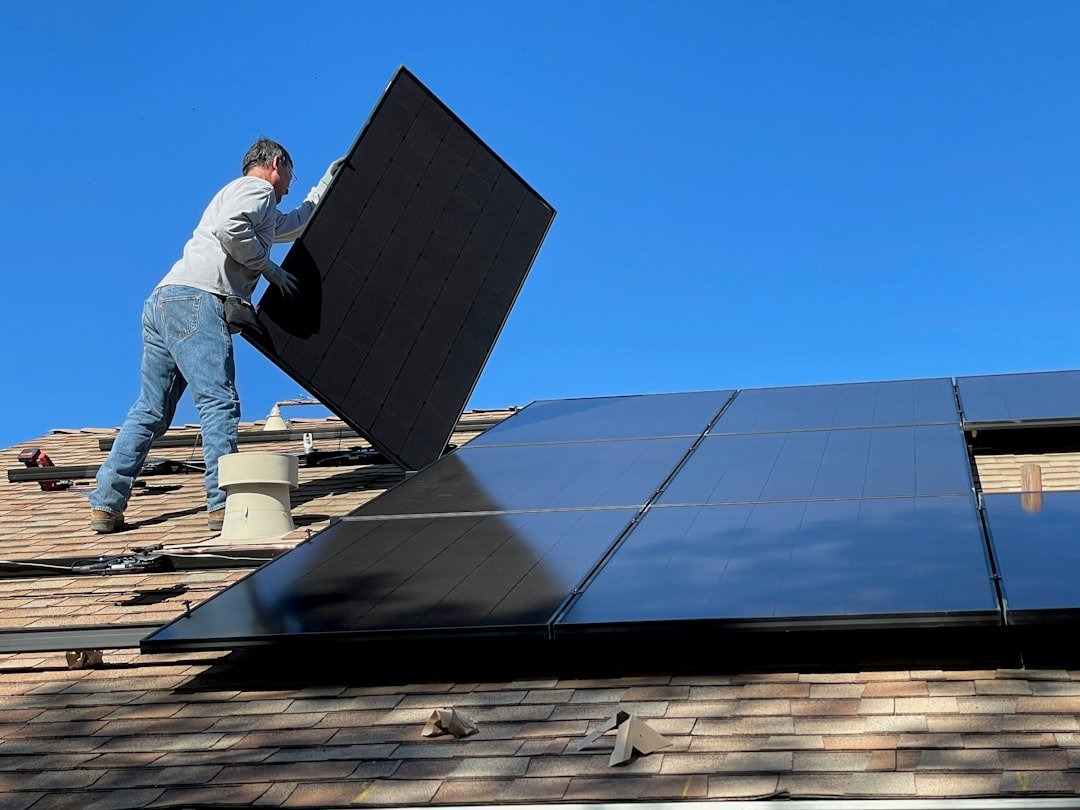
How to Choose the Right Solar Panel System for Your Home
Switching to solar is one of the best investments a homeowner can make for long-term energy savings and resilience. The right system reduces bills, increases home value, and can provide backup power during outages.
This guide walks through the practical steps to choose a system that fits your roof, budget, and goals. It covers load assessment, panel and component selection, storage, installation considerations, and useful tips to future-proof your setup.
Assess your home’s energy use
Start with how much energy you use now and how that might change. Look at 12 months of utility bills to find your average kWh per month and identify peaks. Consider planned changes — EV charging, heat pumps, or additions — that will increase demand.
To get accurate, circuit-level data and identify savings opportunities, consider adding a dedicated energy monitor like a home energy monitor. Real-time data makes sizing and payback estimates far more reliable.
Choose the right panel type and quantity
Solar panels differ by cell type (monocrystalline, polycrystalline, thin-film), efficiency, and form factor. Monocrystalline panels offer the best efficiency per square foot and are a good choice when roof space is limited. If you have ample roof area and a tight budget, lower-efficiency panels may still meet your needs.
Compare panel ratings (Watt peak), temperature coefficients, and warranty terms. Browse your options in the solar panels category to match panel output, size constraints, and aesthetics to your roof.
Pick the right inverter
The inverter converts DC power from panels into the AC power your home uses. Decide between string inverters, microinverters, and power optimizers:
- String inverters are cost-effective for uniform roof conditions.
- Microinverters or optimizers work best if shading or multiple roof orientations are present.
- Hybrid inverters handle battery storage integration directly and simplify system design.
Look for inverters with smart monitoring, good efficiency, and a warranty that matches your panels. Compare models in the inverters category to find appropriate sizes and features.
Decide on battery storage and capacity
If you want backup power or to maximize self-consumption, add batteries. Key choices are battery chemistry (LiFePO4 vs. lead-acid), usable capacity, cycle life, depth of discharge, and BMS features.
Estimate how many kWh you need for typical outages vs. daily load-shifting. A small battery can cover essential loads and shave peak demand; a larger system can supply most household usage. Explore options under solar batteries and choose a solution that balances cost with runtime and longevity.
Select the right charge controller and balance-of-system components
For DC-coupled or off-grid systems, the charge controller manages panel charging into batteries. MPPT controllers are more efficient and handle variable panel voltages better than PWM controllers. For grid-tied, battery-backed systems, ensure your inverter has proper charge control or pair it with an MPPT unit.
Look at charge controllers with the appropriate current rating and voltage compatibility for your panel string and battery bank. See compatible parts in the solar charge controllers category to complete your system design.
Mounting, wiring, and installation accessories
Proper racking, flashing, wiring, and connectors ensure performance and longevity. Consider roof type, wind and snow load ratings, and aesthetic preferences when choosing mounts. Don’t forget conduits, combiner boxes, disconnects, and grounding hardware.
Use certified, weatherproof components and plan cable runs to minimize voltage drop. You can view racking, clamps, and wiring accessories in the solar installation accessories section to ensure you have the right parts for a code-compliant install.
Plan for backup power and emergency use
If resilience is a priority, design your system to island during outages and power critical circuits. Decide whether you want whole-house backup or select circuits on a transfer switch. Consider integrated solutions that provide seamless UPS-like transfer for critical loads.
If you want a portable or modular backup option, also review products in the backup power category — these can be combined with rooftop panels or used independently for quick restoration.
Integrate EV charging and future-proofing
If you own or plan to buy an electric vehicle, include charging in your design. Level 2 chargers draw significant power and can change load profiles substantially. Consider load management, timed charging, or solar-direct charging to maximize daytime solar use.
Review hardwired and smart solutions available under EV chargers. Smart chargers can be scheduled or integrated with energy monitoring to avoid grid peaks and use solar when available.
Sizing, incentives, and budgeting
After load analysis and equipment selection, size the system to meet either a percentage of your annual consumption or a target offset of your bill. Use a conservative estimate for production (panel orientation, tilt, shading, and local climate).
Factor in installation labor, permitting, interconnection fees, and any necessary electrical upgrades. Investigate available local or federal incentives and net metering policies to refine your payback estimate. Remember, cheaper upfront costs may mean lower output or shorter warranties — prioritize long-term value.
Maintenance, warranties, and performance guarantees
Choose panels and components with clear warranties and an established support channel. Schedule annual checks for debris, loose mounts, and wiring integrity. Keep inverter logs to spot underperformance early and maintain module cleanliness in dusty climates.
Document system specs and commissioning records — they’re essential for warranty claims and future resale value.
Quick checklist before you buy
- Gather 12 months of energy bills and monitor current usage.
- Decide goals: bill savings, resilience, or both.
- Choose panel type and determine roof space and orientation.
- Select inverter type compatible with panels and battery strategy.
- Choose battery capacity if backup or self-consumption is required.
- Ensure mounts, wiring, and safety equipment meet local code.
- Get multiple installer quotes and check references and certifications.
- Confirm warranties, commissioning tests, and monitoring setup.
FAQ
- How many panels do I need? Calculate your annual kWh, divide by expected annual panel output per kW in your location, and account for roof constraints. A site-specific estimate or energy monitor data gives best results.
- Do I need batteries? Not always. Batteries add cost but provide backup and higher self-consumption. If you want outage protection or time-of-use savings, batteries are worth considering.
- What inverter is best for shaded roofs? Microinverters or string inverters with optimizers handle shading better than a single string inverter and often improve overall yield.
- How long do panels last? Quality panels often carry 25-year performance warranties; many continue producing beyond that with slightly reduced output.
- Can I install it myself? Small portable and kit systems can be DIY, but grid-tied rooftop systems usually require professional installation for safety, code compliance, and incentives.
- How do I maximize solar use with an EV? Use smart charging, schedule charging during peak solar production, or integrate chargers with your energy monitoring to prioritize solar power.
Conclusion — practical takeaway
Choose a system that starts with accurate energy data, matches panel and inverter types to your roof and shading, and includes storage if you need resilience. Use quality components, confirm warranties, and work with reputable installers. A well-sized, professionally installed system will deliver reliable savings and peace of mind for years.
Products Featured in This Article

Smart Home Energy Monitor with 16 5…
From the brand ⚡ EASY INSTALLATION: Installs in circuit panel of most homes with clamp-on sensors….
