
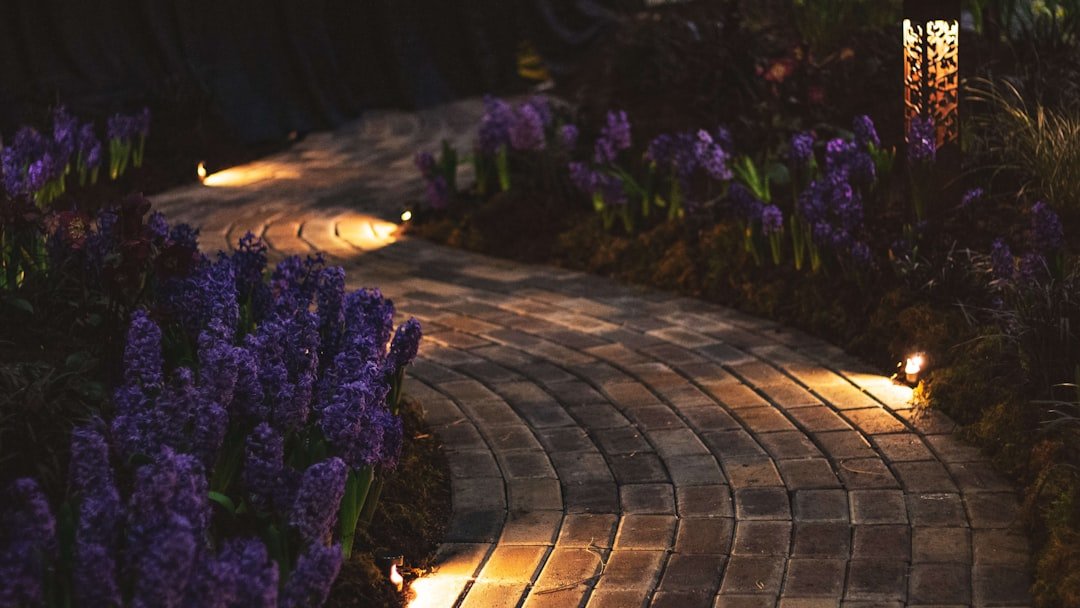
Good outdoor lighting makes gardens, driveways, and patios safer, more usable, and more attractive after dark. Solar lighting is a practical way to add illumination without trenching cables or raising electricity bills. This guide helps you choose, size, install, and maintain reliable solar lighting systems for any outdoor space.
Read on for clear advice on fixture types, panel and battery sizing, mounting and placement, wiring basics, and low-maintenance strategies to keep lights bright year-round.
Planning your outdoor solar lighting layout
Start by mapping the areas you want to light: pathways, steps, driveway edges, seating areas, and architectural features. Note how long each area needs to be lit after dusk, and whether motion-activated or continuous lighting is best. Sketch a simple plan with approximate distances between fixtures; this helps determine how many fixtures and what capacity of solar support you’ll need.
Types of solar lights and where to use them
Solar fixtures fall into a few practical categories:
- Pathway and stake lights — low-height, decorative, best for marking walkways and borders.
- Wall and porch lights — mounted to structures, good for entrances and garages.
- Flood and security lights — higher output for driveways and wide areas; often include motion sensors.
- String and accent lights — low-power, great for ambiance in seating areas.
For many homeowners, a mix of styles works best: pathway lights to guide pedestrians, wall lights by doors for safety, and a few motion-activated spotlights for security. If you prefer shopping by category, see the range of options under Solar Lighting.
Sizing solar panels and batteries
Proper sizing prevents early-night dimming and extends fixture life. Two components determine runtime: the panel energy input and the battery storage.
Calculate daily energy need: list each light’s wattage (or lumens and its LED wattage equivalent), estimate hours lit per night (average), then multiply to get watt-hours per night. Add 20–30% headroom for cloudy days or winter. To supply that energy, choose panels that generate the required watt-hours in your average peak-sun hours. For larger whole-yard systems (fixtures wired to a central system), consider investing in dedicated solar panels sized for your calculated load and local sun exposure.
Batteries store energy for the night. For reliable operation, choose capacity (in watt-hours or amp-hours) that covers your calculated nightly demand plus a buffer for cloudy days. See options and chemistry trade-offs (lead-acid vs. lithium) in the Solar Batteries category.
Controllers, sensors, and mounting hardware
Charge controllers regulate battery charging from panels and protect against overcharge and deep discharge. For central systems or higher-power fixtures, use MPPT or PWM controllers sized to your panel array. If you wire multiple lights to a shared battery, a quality controller is essential — review products in Solar Charge Controllers.
Motion sensors, dusk-to-dawn photocells, and timers can vastly improve efficiency: motion sensors reduce run-time and increase perceived brightness, while photocells automate dusk/dawn switching. For mounts, brackets, conduit clips, and pole hardware make installation tidy and durable — find appropriate parts under Solar Installation Accessories.
Wiring, placement, and angle best practices
Panel placement and tilt matter. Panels should face true south in the northern hemisphere (true north in the southern) and be angled roughly equal to your latitude for year-round performance. Avoid shading from trees, chimneys, or neighboring structures during peak sun hours.
Keep wiring runs short where possible and use properly rated low-voltage cable for connected fixtures. For central battery systems, use appropriately gauged cables to minimize voltage drop. Seal all outdoor connections with waterproof connectors or heat-shrink and use stainless-steel hardware to resist corrosion. If you need portable or temporary setups, consider units designed for mobility or on-the-go charging.
Choosing complete kits vs. individual fixtures
Complete kits can speed installation and simplify compatibility: they often bundle panels, batteries, controllers, and lights sized for typical applications (a garden path kit, for example). Kits are a good starting point for homeowners who want fewer decisions and proven component pairing.
For a DIY upgrade or selective replacement, individual fixtures let you prioritize quality in high-use spots. For example, a dedicated pathway set like the BITPOTT Solar Pathway Lights are designed specifically for marking walkways and driveways. Compare kit and component choices and pick what matches your layout and maintenance preferences.
Backup, portability, and hybrid approaches
If you want lighting that persists through several cloudy days or functions as emergency lighting, hybrid solutions combine solar input with stored or grid power. Portable battery units and integrated generators can supply higher loads or be used seasonally. Browse reliable backup and mobile power options such as Portable Power Stations to provide extended runtime or to run more powerful floodlights when needed.
Maintenance, troubleshooting, and upgrades
Regular maintenance keeps solar lights performing: clean panels every 3–6 months, replace batteries according to their rated cycles, trim foliage that creates shade, and check mounting hardware for rust or looseness. If lights dim early, check for reduced panel output due to dirt or shading, test battery voltage, and inspect connections.
For charging small standalone lights or trickle charging applications, solar chargers and small power banks can serve as useful auxiliary tools — see small-form solutions in the Solar Chargers category.
Checklist: Quick installation and purchase guide
- Map lighting zones and estimate nightly hours per zone.
- Calculate watt-hours needed per night and add 20–30% buffer.
- Choose panels sized for local peak-sun hours and your watt-hour need.
- Select battery capacity to match nightly demand and desired autonomy.
- Pick an appropriate charge controller (MPPT recommended for larger systems).
- Decide between motion-sensor or constant-on fixtures where appropriate.
- Use correct gauge cable and waterproof connectors; avoid shading of panels.
- Schedule panel cleaning and battery checks every 3–12 months.
FAQ
Q: How many lumens do I need for a driveway?
A: Aim for 200–400 lumens for guiding vehicles on a narrow residential driveway; use 800+ lumens for wide driveways or areas needing clearer visibility. Motion-activated higher-output fixtures can save energy while providing brightness when needed.
Q: Will solar lighting work in winter or cloudy climates?
A: Yes, but expect reduced run-time. Increase panel and battery sizing, use higher-efficiency panels, and install panels at a steeper winter tilt to capture lower sun angles. Add a backup battery or portable power station for multi-day autonomy if necessary.
Q: How long do solar batteries last?
A: Lifespan varies by chemistry and depth-of-discharge. Lead-acid batteries typically last 2–5 years with regular use; lithium batteries can last 5–15 years depending on quality and cycles. Follow manufacturer recommendations and keep batteries within recommended temperature ranges.
Q: Can I wire multiple solar lights to a single panel and battery?
A: Yes — commonly done in central systems. Ensure the panel produces enough watt-hours, the battery has enough capacity, and the charge controller and wiring gauge are sized for combined current. Proper planning avoids overloading components and excessive voltage drop.
Q: Are motion sensor lights better than dusk-to-dawn lights?
A: They serve different needs. Motion sensors reduce run-time and enhance perceived brightness for security, while dusk-to-dawn lights provide continuous illumination for safety and ambience. Use a mix based on use-case.
Conclusion
Solar lighting for gardens, driveways, and outdoor spaces is a cost-effective, low-maintenance solution when planned and sized correctly. Measure your energy needs, pick suitable panels, batteries, and controllers, and follow placement and wiring best practices. With the right setup and routine maintenance, solar outdoor lighting delivers reliable performance and adds safety and beauty to your property.
Products Featured in This Article
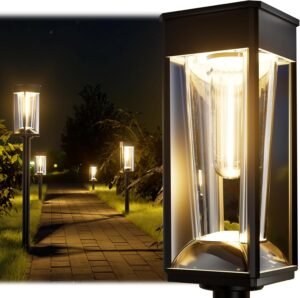
BITPOTT Solar Pathway Lights Outdoo…
Product description The video showcases the product in use.The video guides you through product setup.The video…
